
THE END OF A PART IS NOT THE END.
ONE PART.
NOT THE END.
Produce parts.
Not inventory.
A small polymer part can stop an entire vehicle. Lifeline starts where the conventional supply chain ends. With data that stays. And parts made when needed.
The thinking behind it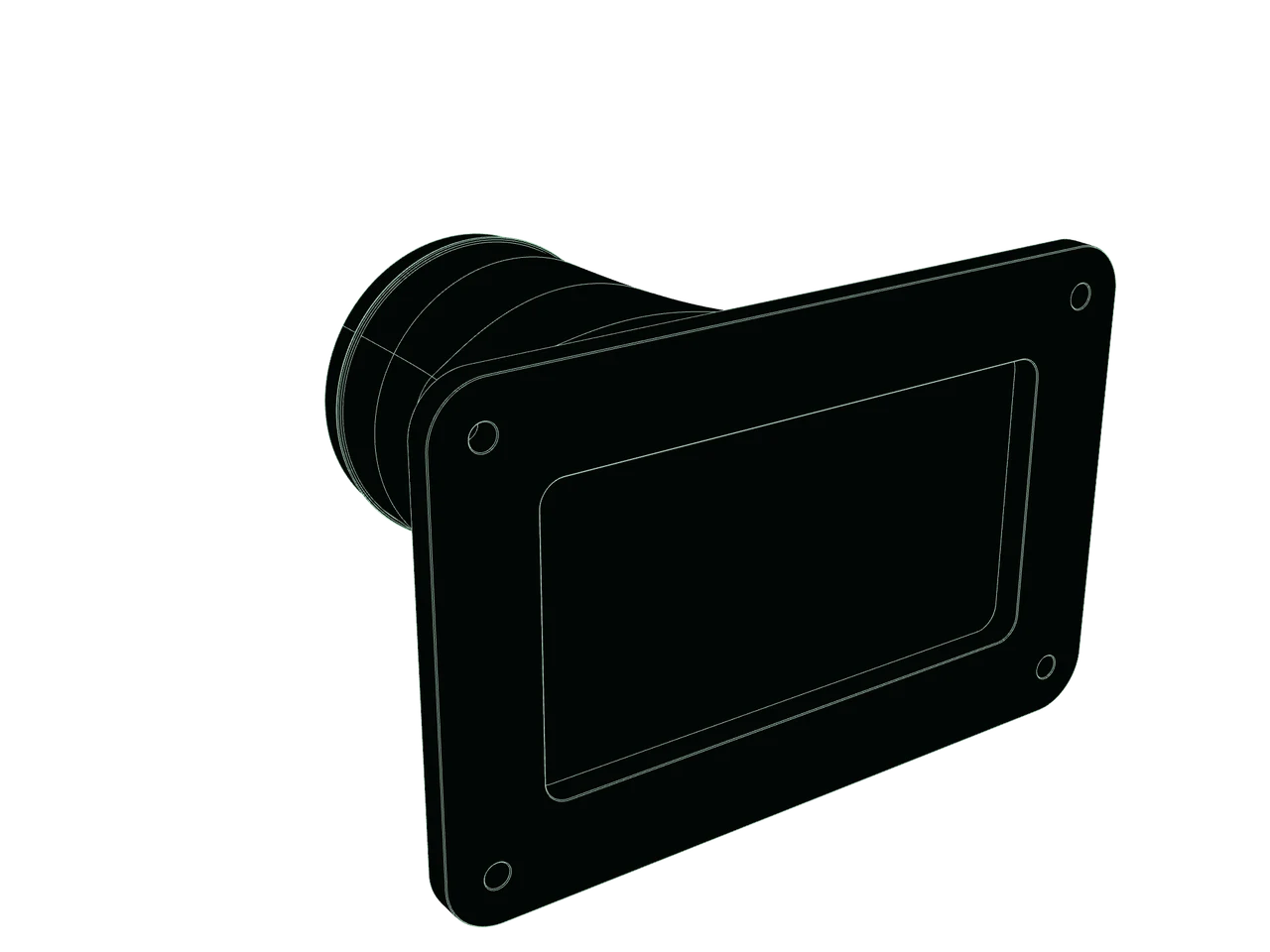
The engine runs.
The body is sound.
The parts list says:
DISCONTINUED.
The vehicle hasn’t reached its end.
Its spare parts supply has.
On classic and modern classic cars, this often shows up in inconspicuous places. A bracket breaks. An air duct becomes brittle. The matching cover is no longer available. Used parts have often aged just as much.
New tooling and large production runs do not always make sense for rare parts. Remaining stock gets smaller, not younger. That is the gap Lifeline aims to close.
Why parts disappear ↗
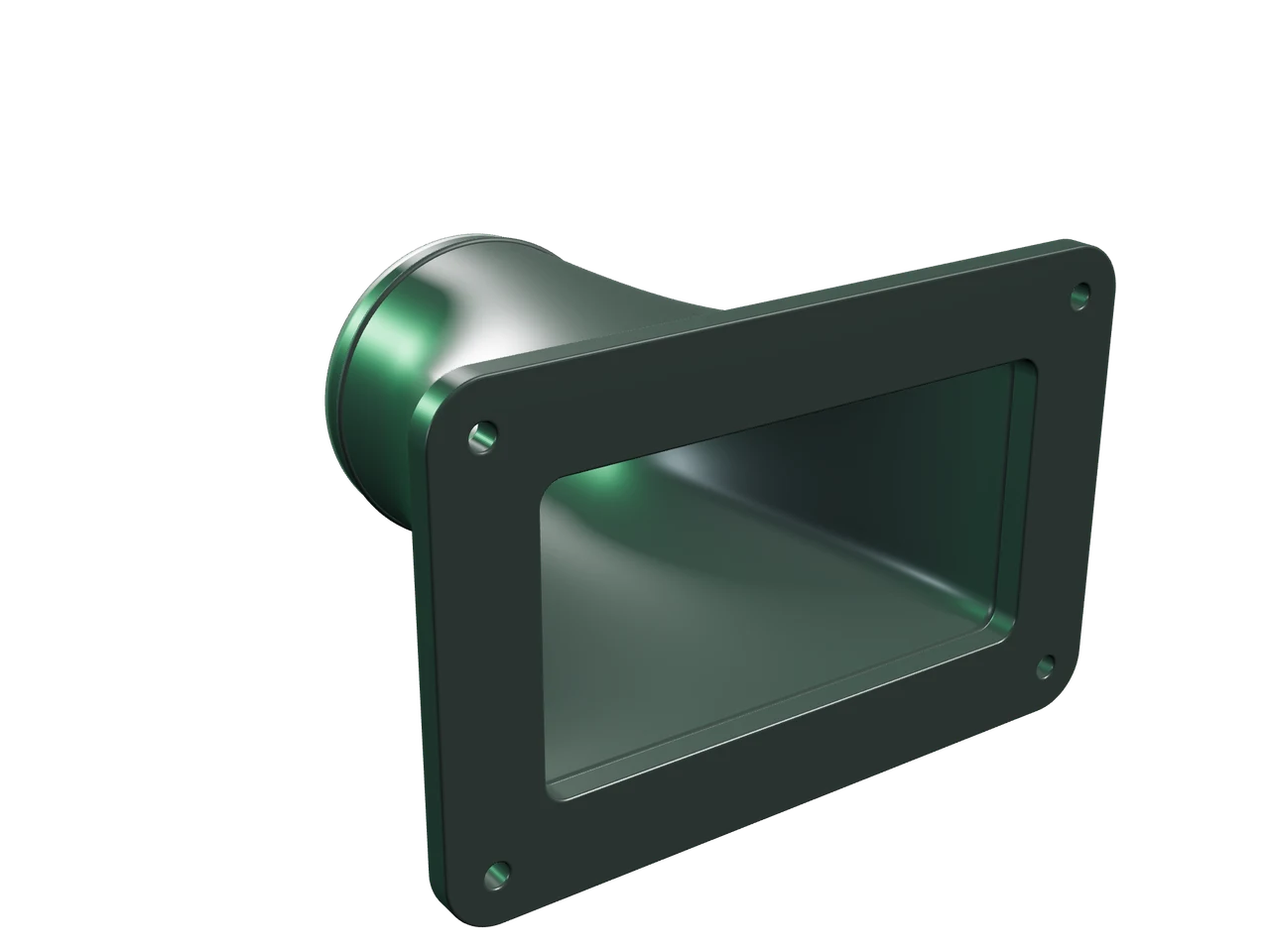
ILLUSTRATIVE GEOMETRY STUDY.
ONE FRACTURE. ONE DECISION.
DOES EVERYTHING
NEED REPLACING?
Or just the part that actually failed?
A broken clip, bracket or plastic adapter can lead to a much larger assembly being replaced. If the failed part can be reproduced separately, the rest can stay. That is where repair gets interesting.
It takes more than copying: installation space, loads, material and ageing belong in the design. Testing determines whether a printable shape becomes a suitable spare part.
Safety-critical functions require separate assessment and, where needed, supporting evidence.
KEEP THE FORM.
LOSE THE SHELF.
Store a spare part for decades.
Or preserve the ability to make it again.
SUPPLY LOGIC / COMPARISON
Committed
before it is needed.
Material. Storage space. Capital.
And the open question of whether the part will ever reach a vehicle.
Stored
until it is needed.
Geometry. Material. Process profile.
The basis for repeatable, traceable manufacturing.
The file does not go into the car. The component does. Digital inventory does not replace the spare part; it changes when the part is produced.
Raw material, available capacity, inspection and lead time remain necessary. Digital models need version control, maintenance and traceable releases.
NO ORDER? NO FINISHED PART ON SPECULATION.
NEED IT FIRST.
THEN MAKE IT.
It sounds simple.
It reverses the logic of stock.
Conventional processes can be very efficient at high volumes. For rare polymer spare parts, another question often matters: how do we make the quantity actually needed without financing a new tool and a large inventory first?
Additive manufacturing can enable individual parts and small batches. Sensibly grouped orders remain possible. On demand means matched to demand, not necessarily one at a time.
FROM MISSING PART
TO MOVING CAR.
Schematic target model, not a live display of orders or available partners.
- 01
A part is needed
A component is missing or broken. Vehicle, installation location and function define the requirement.
- 02
Lifeline catalogue
Find the matching part in the catalogue. Vehicle fitment and variant must correspond.
- 03
Validated data
Released geometry, material, process settings and inspection criteria define the digital manufacturing record.
- 04
Vektor16 coordinates
In the target model, the order is assigned to a suitable fabricator based on process, material, capacity and delivery route.
- 05
Fabricator produces
The fabricator produces the required quantity using the released process. Single parts and small batches are both possible.
- 06
Check quality
Dimensions, surface and functional features are inspected and documented against part-specific criteria.
- 07
Ship to destination
The inspected part is shipped to its recipient. Proximity is a selection criterion, not a blanket promise.
- 08
Back into the vehicle
After checking fit and suitability, the replacement part enables existing equipment to be repaired.
WE DON’T HAVE TO OWN THE MACHINE.
IT HAS TO BE
THE RIGHT
ONE.
Lifeline is the way to the spare part.
Vektor16 is intended to organise the way to production.
Use capacity. Use suitable existing machines rather than build a new central facility for every spare part.
Match capabilities. Material, process, quality and available capacity determine the suitable fabricator. Proximity can be another criterion.
Support continuity. Qualified alternative fabricators can add capacity and resilience. Automated assignment and a comprehensive network are the goal, not an existing delivery commitment.
NOT JUST
“PLASTIC”.
Engineering polymers instead of generic plastic promises. Temperature, UV, mechanical and chemical loads, flexibility, dimensional stability and ageing together define the requirements.
OPEN AN ASSESSMENT FIELD →
01UV & weathering+
Exterior / ASA as a candidate
ASA can be suitable for UV-exposed applications. The specific grade, temperature, load and manufacturing process still matter. This does not establish general environmental superiority.
02Temperature & chemicals+
Application before material
Continuous heat, peak loads and exposure to oil, fuel or cleaners need to be understood. A suitable data sheet does not replace testing under actual service conditions.
03Load & flexibility+
Geometry + material + orientation
Clips need different deformation behaviour from rigid brackets. Layer orientation, notches, creep and repeated loads are part of the design assessment.
04Dimensions & ageing+
Fit throughout service life
Tolerances, moisture uptake, dimensional stability and ageing must suit the vehicle. A printable file is not yet a released replacement part.
THE CAR
IS ALREADY HERE.
ITS NEXT PART
ISN’T. YET.
Here, sustainability is a consequence of a different spare parts model: store digitally, produce on demand and repair precisely.
For vehicles already manufactured, a longer service life can make environmental and economic sense. This cannot be assumed for every vehicle and usage pattern: consumption, mileage, repair effort and available alternatives belong in the overall assessment.
Lifeline addresses a specific obstacle: a small missing part should not unnecessarily prevent a technically sensible repair.
Less waste is a design objective. Not a universal footprint claim.
3D printing also requires material and energy. Supports, failed builds, finishing, packaging and shipping affect the result. Good geometry, suitable processes and reproducible quality can limit unnecessary material use. Robust environmental comparisons require component-specific data across the entire life cycle.
GOOD QUESTIONS.
CLEAR LIMITS.
Which automotive spare parts can be 3D printed?+
Depending on load and location, brackets, clips, ducts, covers and adapters may be candidates. Suitability must be assessed for each component. These examples do not imply current catalogue availability.
Is a 3D scan enough to make a spare part?+
No. Wear, fractures and distortion should not simply be copied. Functional surfaces, tolerances, material and process settings need engineering assessment and physical sample validation.
Is on-demand production always more sustainable?+
No. Benefits depend on quantity, material, energy demand, scrap, transport and achievable service life. On-demand production avoids deliberate manufacturing for uncertain stock, but is not automatic proof of environmental benefit.
Is there already a fully automated manufacturing network?+
The test environment includes the Lifeline catalogue and the Vektor16 portal. The end-to-end manufacturing assignment described here is the target model. This illustration does not establish current capacity or delivery commitments.
SPARE PART NO LONGER AVAILABLE?